
Satwiksairaj Rankireddy and Chirag Shetty just won a historic China Masters title today, adding to a genuinely big year for Indian badminton after Delhi hosted the BWF World Championships last month. If that’s got you back on court, one detail matters more than most players realize: running shoes are actively dangerous for badminton. Their deep tread grips the floor and doesn’t release during the sport’s signature lunges and direction changes — a major, well-documented cause of ankle and knee injuries among players who “just wear whatever’s around.”
We compared three genuinely different badminton-specific shoes across the price range based on real lateral stability and cushioning, not just brand name — because the wrong shoe here is a genuine injury risk, not just a performance compromise.
Quick Comparison
| Rank | Model | Cushioning Tech | Weight | Best For | Approx Price |
|---|---|---|---|---|---|
| 1 | Yonex V100i | Power Cushion, Hexagrip | ~295g | Best overall, most trusted | ₹1,700–1,900 |
| 2 | Li-Ning Halberd Strike | ProbarLoc stability plates | ~300g | Best lateral stability | ₹4,500–4,700 |
| 3 | Nivia Super Court 2.0 | Phylon midsole | ~250-255g | Best budget pick | ₹1,500–1,700 |
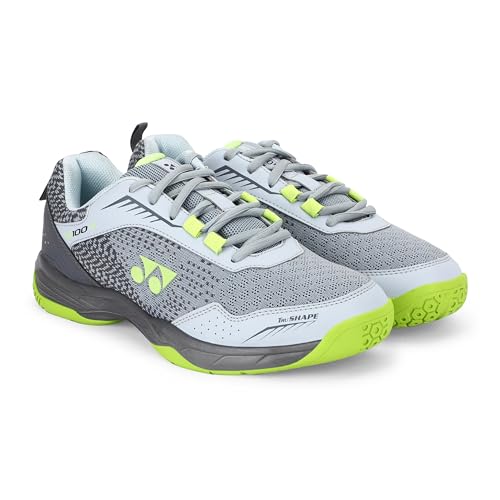
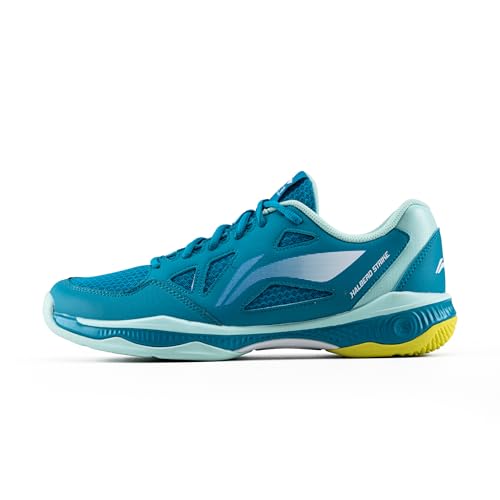
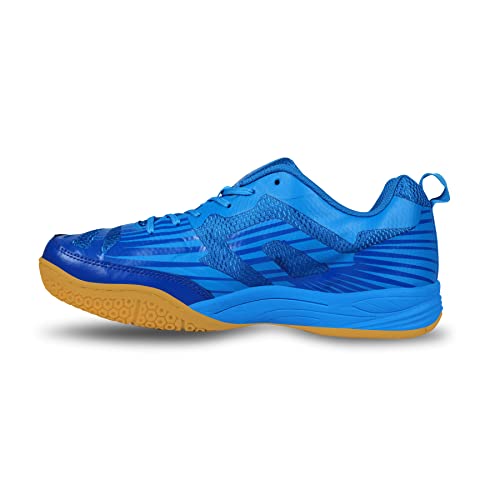
1. Yonex V100i — Best Overall, Most Trusted
Yonex’s Power Cushion technology genuinely absorbs shock and converts impact into smoother movement, rather than just adding generic padding — a real difference during the constant lunging and quick direction changes badminton demands. Combined with a non-marking sole safe for indoor courts and Hexagrip for genuine traction, this is the shoe most serious Indian club players default to.
Real trade-off worth knowing: the fit reportedly runs slightly narrow — worth checking reviews for your specific foot width or sizing up if you’re between sizes, rather than assuming standard sizing applies.
- ✅ Genuine Power Cushion shock absorption, not just generic padding
- ✅ Non-marking sole, safe for indoor court use
- ✅ Widely trusted, most-reviewed option at this price point
- ⚠️ Fit runs slightly narrow — check sizing carefully
- ⚠️ Less premium cushioning than Yonex’s higher-tier models (₹5,000+)
Best for: Regular club players wanting genuine shock absorption and proven reliability at an accessible price.
2. Li-Ning Halberd Strike — Best Lateral Stability
The standout here is ProbarLoc stability plates — synthetic reinforcement specifically engineered to lock the foot in place during lateral lunges, genuinely reducing ankle roll risk during the sport’s characteristic side-to-side movement. At just 300g with a breathable mesh upper, it doesn’t sacrifice speed for that added stability.
Real trade-off worth knowing: this sits meaningfully above the Yonex V100i in price for the added stability engineering — worth it for players doing frequent aggressive lateral movement (competitive or intermediate-advanced play), less necessary if you play casually a few times a month.
- ✅ Genuine engineered lateral stability, reduces ankle roll risk during lunges
- ✅ Lightweight (300g) despite the added stability structure
- ✅ Breathable mesh upper for long session comfort
- ⚠️ Priced significantly above the Yonex and Nivia options here
- ⚠️ The stability benefit matters most for aggressive, frequent players — less critical for casual use
Best for: Competitive or intermediate-advanced players doing frequent aggressive lateral movement who want engineered ankle stability.
- Li-Ning Halberd Strike Non Marking Badminton Shoes | All Indoor Sports | Lightweight, Breathable & Durable (Black/Standa…
3. Nivia Super Court 2.0 — Best Budget Pick
At under ₹1,700, this covers real badminton-specific essentials — a genuine Phylon midsole for cushioning and toe reinforcement for durability during repeated lunges, rather than a generic sports shoe repurposed for the court. At roughly 250-255g, it’s actually lighter than both pricier options above.
Real trade-off worth knowing: build quality and long-term durability are a step below the Yonex and Li-Ning options — genuinely fine for beginners or occasional players, but frequent competitive players will likely outgrow it faster than the pricier picks.
- ✅ Lowest price in this comparison, genuinely lighter weight than pricier options
- ✅ Real badminton-specific cushioning and toe reinforcement, not a generic sports shoe
- ✅ Good multi-sport crossover (squash, table tennis) if you play more than one indoor sport
- ⚠️ Less durable long-term than Yonex or Li-Ning under frequent competitive use
- ⚠️ Narrower size availability than the bigger brands
Best for: Beginners, occasional players, and budget-conscious buyers wanting genuine badminton-specific design without a premium price.
Buying Guide: What Actually Matters
- Never play badminton in running shoes: This is worth repeating — running shoe treads are designed to grip and hold, not release, during lateral movement. This mismatch is a well-documented, common cause of ankle and knee injuries in casual players. A badminton-specific non-marking sole is designed to allow controlled sliding during lunges.
- Non-marking soles are mandatory for most indoor courts: Beyond safety, most Indian badminton facilities won’t allow shoes with soles that leave marks on the court — check for “non-marking” explicitly in the product description.
- Cushioning technology matters more than brand prestige: Power Cushion (Yonex), Phylon (Nivia), and similar branded cushioning systems genuinely absorb impact during repeated jumps and lunges better than a generic foam sole — worth prioritizing over just picking the most recognizable name.
- Replace shoes based on use, not visible wear: Most club players need new badminton shoes every 9-15 months even if the upper still looks fine — the midsole compresses and outsole grip degrades well before visible damage appears, silently reducing both performance and injury protection.
- Match shoe stability to your play style: Casual or beginner players are well served by standard cushioning. Competitive or aggressive lateral-movement players benefit meaningfully from shoes with reinforced stability plates, like the Li-Ning option here.
For general sports equipment and injury prevention guidance, see the Sports Authority of India.
Frequently Asked Questions
Can I use running shoes for badminton? No — this is genuinely risky. Running shoe treads are designed to grip and hold during forward motion, but badminton’s constant lateral lunges need a sole that allows controlled sliding. Using running shoes is a well-documented cause of ankle and knee injuries among casual players.
How often should badminton shoes be replaced? Most regular club players need new shoes every 9-15 months, even if the upper still looks intact — the midsole cushioning compresses and the outsole grip wears down well before visible damage shows.
Why do badminton shoes need to be “non-marking”? Most indoor badminton facilities in India require non-marking soles to protect the court surface — regular sports or running shoe soles can leave visible marks and may not be allowed on-court.
Is a more expensive badminton shoe actually necessary for casual players? Not necessarily — a genuine badminton-specific shoe with proper cushioning (even a budget option like Nivia) is far more important than raw price. Premium stability features become more valuable specifically for competitive or aggressive lateral-movement play, less so for occasional casual games.
Related reading: Best Badminton Racket in India (2026) · Best Cycling Helmet in India (2026)
Affiliate Disclosure: This post contains Amazon affiliate links. If you purchase through them, we may earn a small commission at no extra cost to you. All recommendations are based on independent research and genuine buyer feedback.