
With the 2026 BWF World Championships just concluding in New Delhi — the first time this event has been held on Indian soil since 2009 — badminton interest across the country is genuinely at a high point right now. If watching world-class rallies at Indira Gandhi Arena has you wanting to pick up a racket again (or for the first time), the good news is you don’t need to spend anywhere close to what the pros use to get a genuinely good racket to start with.
We compared three options across the beginner-to-improving range based on real balance, flex, and sweet-spot size — the three factors that actually determine how a racket feels in your hand, far more than brand name alone.
Quick Comparison
| Rank | Model | Balance | Weight | Best For | Approx Price |
|---|---|---|---|---|---|
| 1 | Yonex Voltric Lite 40i | Head-heavy | 78g | Best overall beginner, ready to play | ₹1,999–2,300 |
| 2 | Li-Ning G-Force 5900 Superlite | Even balance | Lightweight | Best value alternative | ₹2,300–2,600 |
| 3 | Yonex Astrox 99 Play | Head-heavy | Standard | Best for improving/intermediate players | ₹3,200–3,600 |
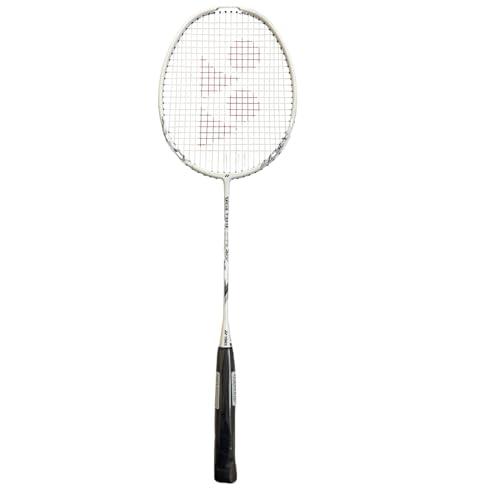

1. Yonex Voltric Lite 40i — Best Overall Beginner, Ready to Play
Yonex is the brand you’ll spot in roughly 7 out of 10 hands on Indian badminton courts, and there’s a real reason beyond marketing — the Isometric head shape genuinely gives about a 10% larger sweet spot than traditional round or oval heads, meaning more forgiveness on off-centre hits, which matters a lot when you’re still developing consistent technique. This model comes pre-strung and ready to play straight out of the box.
Real trade-off worth knowing: the head-heavy balance genuinely helps generate smash power with less arm effort, but it also means slightly slower reaction time at the net compared to an even-balance or head-light racket — a fair trade for singles-focused beginners, less ideal if you mainly play fast doubles.
- ✅ Isometric head shape gives a genuinely larger, more forgiving sweet spot
- ✅ Pre-strung, ready to play immediately
- ✅ Widest after-sales support and service network of any badminton brand in India
- ⚠️ Head-heavy balance is slightly slower at the net than lighter alternatives
- ⚠️ Priced a touch above Li-Ning’s equivalent entry-level options
Best for: First-time or beginner players, especially those focused on singles play, who want the most forgiving, trusted racket to start with.
- LIGHTWEIGHT GRAPHITE FRAME: The Yonex Voltric Lite 40i features a lightweight graphite frame for swift, effortless swing…
- HEAD HEAVY BALANCE: Designed with a head heavy balance that delivers powerful smashes and precise control during gamepla…
- IDEAL FOR INTERMEDIATE PLAYERS: Perfectly suited for intermediate players looking to elevate their badminton skills and …
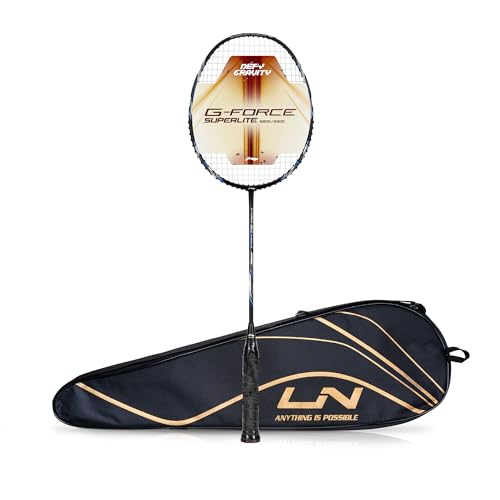
2. Li-Ning G-Force 5900 Superlite — Best Value Alternative
Li-Ning consistently undercuts Yonex by roughly 15-25% at equivalent tiers, and this racket is a genuine example of that value — a lighter, even-balanced build that suits players who want quick reactions and versatility across both singles and doubles, at a price point that makes trying the sport (or upgrading from a starter racket) a low-risk decision.
Real trade-off worth knowing: even-balance rackets like this trade some pure smash power for maneuverability — genuinely the right choice if you value speed and control over raw power, but not the pick if you’re specifically chasing the biggest possible smash.
- ✅ Genuinely strong value — 15-25% cheaper than comparable Yonex options
- ✅ Even balance suits both singles and doubles play
- ✅ Lightweight build, faster reactions at the net
- ⚠️ Less smash power than head-heavy alternatives like the Yonex options here
- ⚠️ Yonex still has a wider after-sales service network across India
Best for: Budget-conscious players and doubles-focused players who prioritize speed and control over maximum smash power.
- Ultralight Aerodynamic Shaft: The shaft on the 5800 Superlite utilizes Li-Ning’s TB Nanotechnology to create an aerodyna…
- Power-Tuned Flex: Strategic flex points in the shaft generate extra snaps for more powerful smashes and quick reaction s…
- Attacking Head Balance: The head-heavy balance positions more mass in the racket head to generate maximum power and cont…
3. Yonex Astrox 99 Play — Best for Improving/Intermediate Players
This is the entry point into Yonex’s Astrox line — the same attacking DNA used in the professional-tier Astrox 99 Tour, at a fraction of the price. As your technique improves and you start generating more of your own power, this racket’s head-heavy design and stiffer shaft (compared to true beginner rackets) reward more developed swing mechanics with genuinely more explosive smashes.
Real trade-off worth knowing: the stiffer shaft here is less forgiving for true beginners who haven’t developed consistent swing technique yet — it rewards good form but can feel harsh on mishits, so this is genuinely a step-up racket rather than a first-ever purchase.
- ✅ Genuine entry point into Yonex’s professional Astrox attacking technology
- ✅ Rewards developing technique with more explosive smash power
- ✅ Builds toward the same racket family used at the professional level
- ⚠️ Stiffer shaft is less forgiving than true beginner rackets on mishits
- ⚠️ Better suited to players with some experience, not absolute first-timers
Best for: Players who’ve been playing for a few months and are ready to move beyond a pure beginner racket toward more attacking play.
- Material and Flexibility: Constructed with carbon material, offering a blend of strength and flexibility. The medium fle…
- Head Shape: Designed with an isometric head, which expands the sweet spot on the racket. This contributes to a larger hi…
- Innovative Features: Incorporates a new grommet pattern, emphasizing an updated and advanced design. The Rotational Gene…
Buying Guide: What Actually Matters
- Balance determines playing style more than brand: Head-heavy rackets generate more smash power with less arm effort, suited to attacking singles play. Head-light rackets react faster at the net, better for defensive play and doubles. Even-balance rackets sit in between, offering all-round versatility.
- Shaft flexibility should match your skill level: Flexible shafts do more of the work for beginners who haven’t developed full swing power. Stiffer shafts reward more developed technique with more explosive, controlled power — but feel harsh and unforgiving in less experienced hands.
- Weight affects speed vs power trade-off: Lighter rackets (75-80g) swing faster, better for quick reactions and doubles. Heavier rackets generate more power per swing but require more arm strength and stamina to use effectively over a full match.
- Get it professionally strung, don’t skip this: Improper stringing genuinely wastes a good racket’s technology. Authorized Yonex or Li-Ning service centers, or specialized badminton stores, offer proper stringing (₹800-1,200 including string) — a local general sports store without badminton specialization can damage a premium frame with incorrect tension or knotting.
- Restring based on how often you actually play: Recreational players (1-2 times weekly) should restring every 3-6 months or when the shuttle noticeably stops flying as far. Competitive players training 3-5 times weekly need more frequent restringing.
For general sports equipment safety and quality standards, see the Bureau of Indian Standards (BIS).
Frequently Asked Questions
Should a beginner choose Yonex or Li-Ning? Yonex is generally the safer beginner choice due to its Isometric head shape, which gives roughly a 10% larger, more forgiving sweet spot. Li-Ning offers strong value at 15-25% lower prices for comparable performance, a good option if budget is the main constraint.
What’s the difference between head-heavy and head-light rackets? Head-heavy rackets generate more smash power with less arm effort, suited to attacking singles play. Head-light rackets react faster at the net, better suited to defensive play and fast doubles rallies.
How often should a badminton racket be restrung? Recreational players (1-2 times a week) should restring every 3-6 months or when the shuttle stops flying as far as it used to. Competitive players training 3-5 times weekly need more frequent restringing due to higher string wear.
Is it worth paying extra for professional stringing? Yes — improper stringing genuinely wastes even a premium racket’s technology. Get racquets strung at authorized brand service centers or specialized badminton stores rather than a general sports shop without specific badminton expertise.
Related reading: Best Yoga Mat in India (2026) · Best Adjustable Dumbbells in India (2026)
Affiliate Disclosure: This post contains Amazon affiliate links. If you purchase through them, we may earn a small commission at no extra cost to you. All recommendations are based on independent research and genuine buyer feedback.