We have all been there. You buy a fancy smart bulb, install it, and feel like Tony Stark. Two weeks later, the Wi-Fi disconnects, the bulb starts flickering at 2 AM after a power cut, and your grandmother is yelling because she can’t find the physical switch.
In 2026, the Indian smart home market is booming, especially after the Union Budget 2026 made automation components cheaper. But “Smart” doesn’t always mean “Easy.” Many first-time buyers in India fall into specific traps—like voltage mismatches or router overloads—that turn their expensive gadgets into e-waste.
As a tech researcher who has tested hundreds of devices, I have identified the 7 most common mistakes Indian homeowners make when upgrading their homes—and exactly how to fix them.
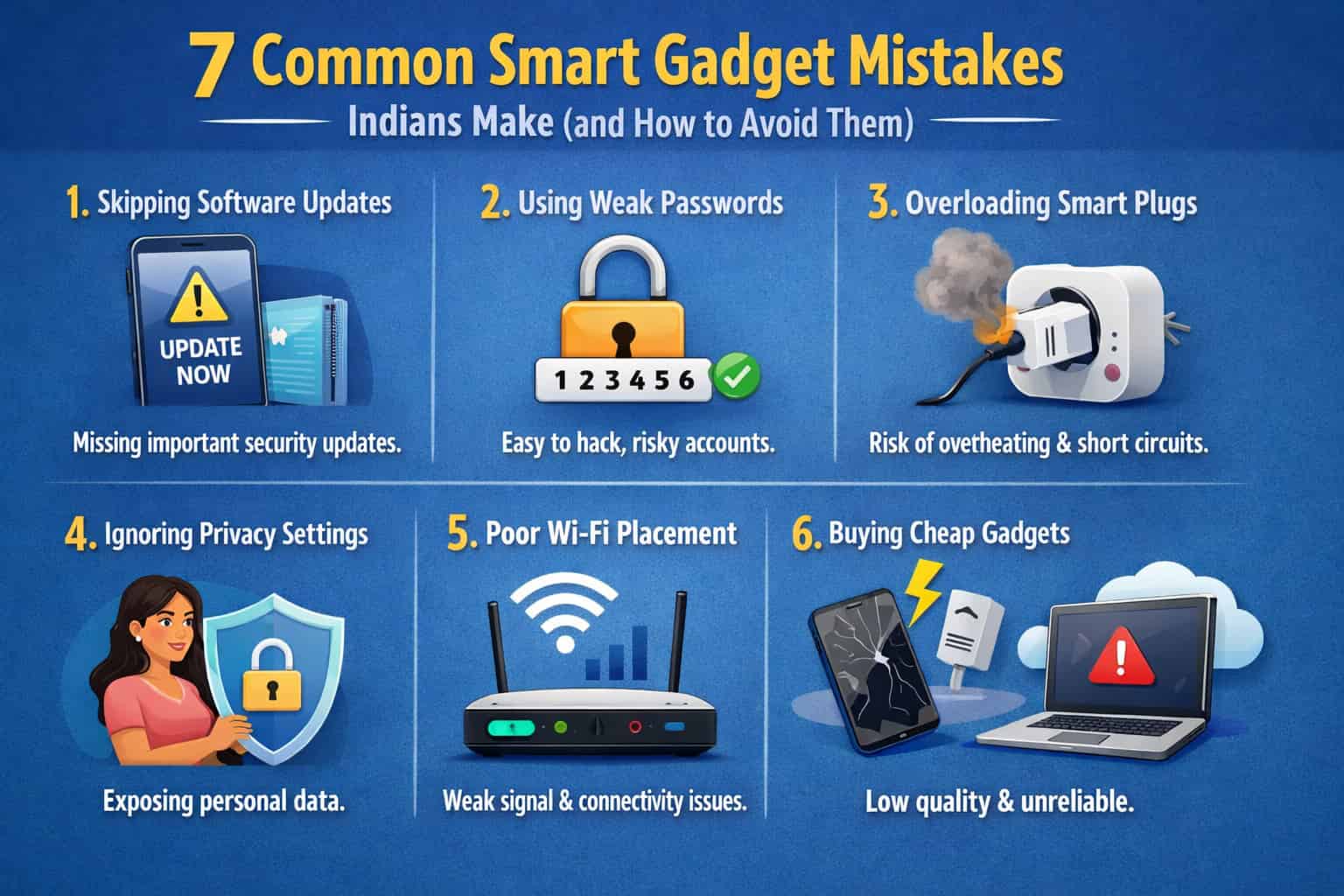
7 Common Smart Gadget Mistakes (And Fixes)
1. Mistake #1: The “Wi-Fi Bulb” Overload Trap
The Mistake: Buying 15 cheap Wi-Fi bulbs and connecting them directly to your standard ISP router (JioFiber/Airtel default router).
The Problem: Most basic routers provided by Indian ISPs can only handle 15-20 devices steadily. When you add 15 bulbs, your phone’s Wi-Fi starts dropping, or the bulbs go “offline” randomly.
The Fix:
- Use a Zigbee Hub: Instead of Wi-Fi bulbs, buy Zigbee bulbs (like Philips Hue or Aqara). They connect to one Hub, and that Hub connects to your router. 50 bulbs = 1 device on your Wi-Fi.
- Upgrade Router: If you must use Wi-Fi gadgets, invest in a decent Wi-Fi 6 Mesh Router that can handle 50+ devices.
2. Mistake #2: Ignoring the “Neutral Wire” Reality
The Mistake: Buying fancy US/EU standard Smart Switches from Amazon Global without checking your switchboard.
The Problem: Most Indian switchboards do not have a Neutral wire running to the switch (only Live and Load). Most smart switches need a neutral wire to stay powered. Without it, they won’t work, or you’ll need a messy capacitor installation.
The Fix:
- Buy “No-Neutral” Smart Switches. Brands like Sonoff or specific Indian brands (Tata Power EZ Home) make versions specifically for Indian wiring.
- Consult an electrician before ordering.
3. Mistake #3: The “Imported Voltage” Disaster
The Mistake: Importing a cool kitchen gadget or smart vacuum from the USA because it was cheaper.
The Problem: The USA uses 110V. India uses 220V-240V. If you plug a 110V Dyson or KitchenAid into an Indian socket without a heavy-duty step-down transformer, it will fry instantly. Smoke, spark, dead gadget.
The Fix:
- Check the Label: Look for “Input: 100-240V ~ 50/60Hz”. If it says “110V Only,” do not plug it in directly.
- Buy Local: Stick to gadgets launched officially in India to ensure proper plugs and voltage compatibility.
4. Mistake #4: Forgetting “Power Cut” Memory
The Mistake: Buying cheap smart lights that reset after a power cut.
The Problem: In India, power cuts are common. When power returns at 3:00 AM, some cheap smart bulbs default to “100% Brightness ON.” You will wake up thinking you’re being interrogated.
The Fix:
- Look for devices with “Power-On Behavior” settings (like Philips Hue, Wipro Next, or Yeelight).
- Set them to “Restore Last State” or “Do Not Turn On” so you sleep peacefully when the power comes back.
5. Mistake #5: Creating an App “Khichdi”
The Mistake: Buying a Wipro bulb, a Xiaomi camera, a Syska plug, and a Philips strip because they were on sale.
The Problem: You now need 4 different apps to turn off your room. It’s annoying, and automation (e.g., “Turn on light when camera sees motion”) becomes impossible.
The Fix:
- Stick to One Ecosystem: Try to buy everything compatible with Google Home or Amazon Alexa.
- Look for Matter: In 2026, buy devices with the Matter logo. This ensures they all talk to each other, regardless of the brand.